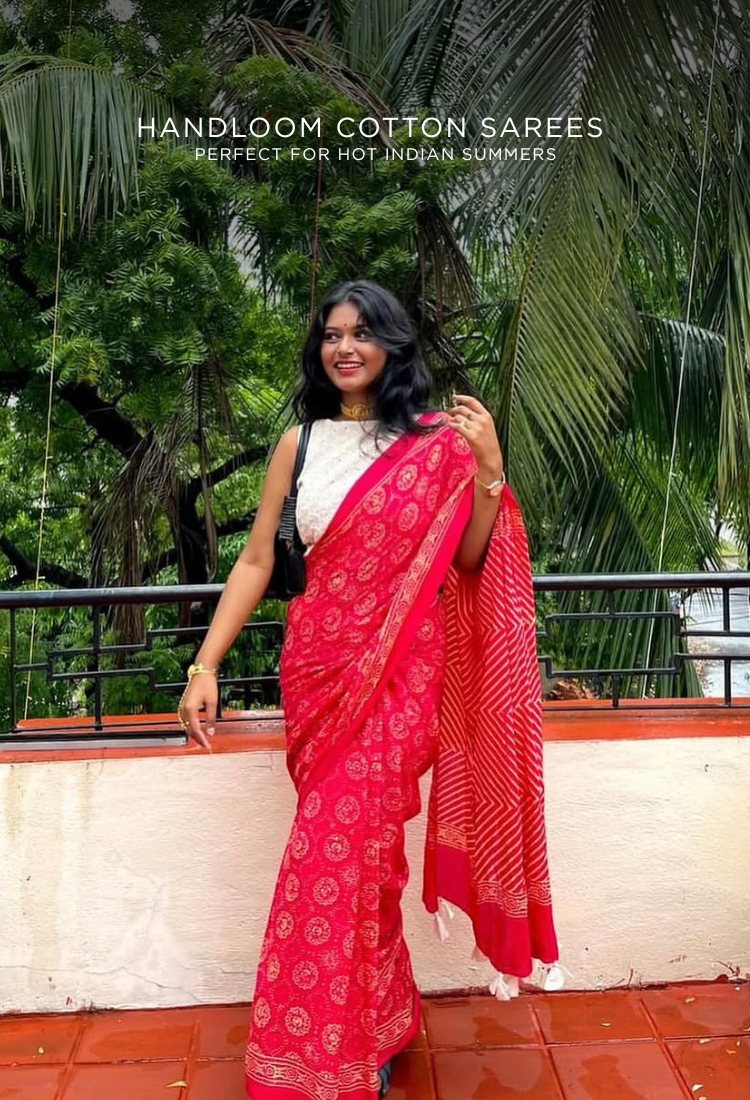
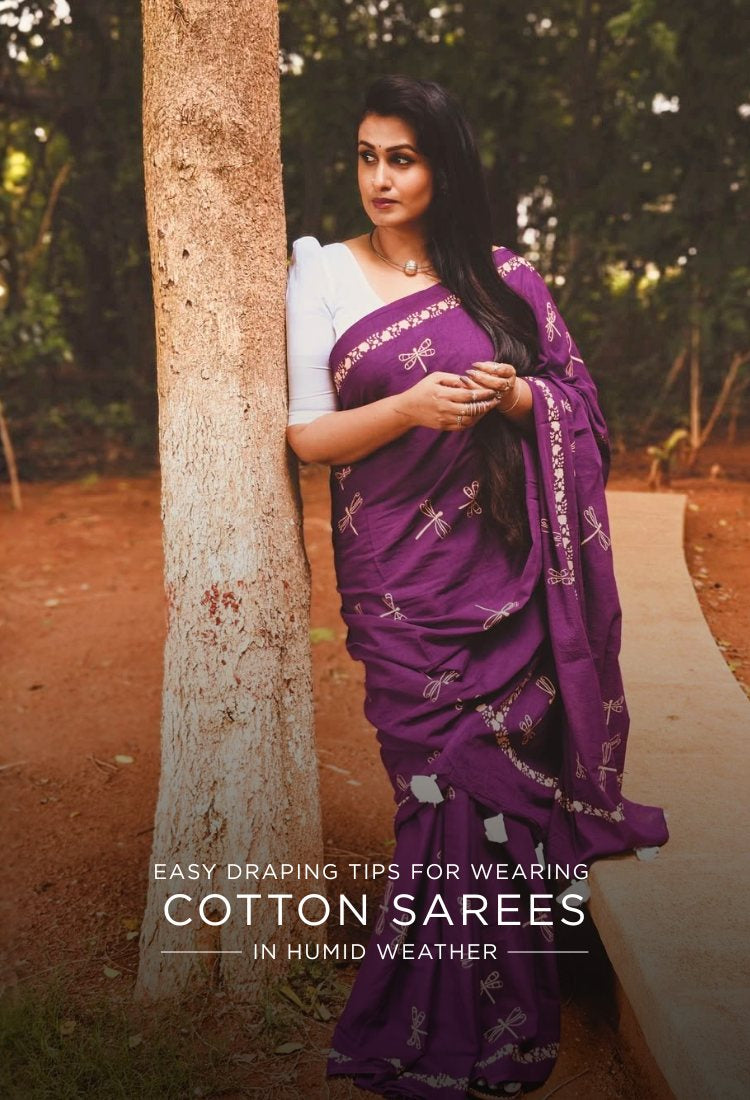
Summer saree shopping can feel like a science experiment — you want something breathable, light, photogenic, and still office-appropriate or festive when needed. Two top contenders every summer wardrobe debates about are soft cotton and linen sarees. Both are excellent for hot weather, but they behave differently. This guide breaks down the practical differences, helps you choose by occasion and body type, and gives care + styling tips so you get the best out of your summer sarees.
You may also like: Easy Draping Tips for Wearing Cotton Sarees in Humid Weather
Quick answer
If you want ultimate breathability and a crisp, relaxed look — go linen. If you prioritise soft hand-feel, easy drape, and low-maintenance everyday wear — go soft cotton. Both keep you cool; the best pick depends on texture, drape, and how you plan to wear the saree.
The fabric basics (what makes them different)
Soft cotton
-
Made from cotton fibres; “soft cotton” often refers to combed or mercerised cotton that feels smoother and softer against skin.
-
Lightweight, good moisture absorption, very comfortable.
-
Drape: softer, clings a little, sits neatly when pleated.
-
Care: generally easy to wash, less prone to heavy creasing than pure linen (depending on weave).

Linen
-
Made from flax fibres. Natural, breathable, and very thermoregulatory (keeps you cool).
-
Lightweight but with a distinctive textured, slightly coarse hand — though high-quality linen is softer.
-
Drape: more structured and airy; develops characteristic slubs and natural wrinkles which are part of its aesthetic.
-
Care: can wrinkle more easily; usually comfortable after one or two washes and may require light ironing if you want a crisp look.

Comfort in hot, humid conditions
-
Breathability: Both fabrics are breathable, but linen wins narrowly — its fibre structure allows air to pass more freely, making it especially good in high humidity.
-
Moisture wicking: Cotton absorbs sweat well; linen absorbs too but dries faster. If you sweat a lot, linen can feel drier sooner.
-
Heat conduction: Linen feels cool to the touch because it conducts heat away from the body; cotton feels neutral to slightly warm depending on the weave.
Drape, silhouette, and styling
-
Soft cotton sarees give a neat, polished drape. They’re excellent for office wear, formal events, and situations where you want crisp pleats that stay put. Print-friendly: block prints, florals, and delicate zari work all look great.
-
Linen sarees create a relaxed, elegant silhouette with natural volume. They suit minimalist styling, modern borders, and handcrafted weaves. Linen pairs beautifully with chunky jewellery and textured blouses for a breezy, contemporary look.
Styling tip: Combine the two — a cotton saree with a linen blouse or vice versa — to get the best of both textures.
Durability and lifespan
-
Cotton: Solid durability; high-quality cotton sarees (long-staple cotton) last many years with care. They tolerate frequent washing.
-
Linen: Very durable in the long run (lignified flax fibres are strong) and can outlast cotton, but repeated rough handling can cause pilling in lower-quality linen. Linen often softens and improves with age.
Care and maintenance
-
Washing: Both are usually hand-wash friendly. Use mild detergent, cold water, and avoid soaking dyed pieces too long. Cotton tolerates machine wash on gentle cycles; check care labels.
-
Ironing: Linen wrinkles more — iron while slightly damp for a crisp finish. Cotton needs moderate ironing.
-
Storage: Store folded in a cool, dry place. Avoid plastic for long-term storage — allow fabrics to breathe. For heavy embellishments, fold with tissue paper to reduce stress on embroidery.
Sustainability & price
-
Sustainability: Linen (flax) is often touted as more sustainable because flax needs less water and fewer pesticides than cotton. However, sustainability also depends on dyeing, finishing processes, and local manufacturing practices. Organic cotton is a strong sustainable alternative.
-
Price: Good-quality linen sarees can be more expensive than standard cotton, but premium cotton (e.g., long-staple, handwoven varieties) can match or exceed linen pricing.
Which should you choose? (by use-case)
-
Daily office wear: Soft cotton — comfortable, less wrinkly, easy to maintain.
-
Outdoor daytime events: Linen — breathability and cool feel are advantages, especially for brunches and garden events.
-
Festive or formal occasions: Cotton with embellishments or silk-cotton blends often read more festive. But a well-tailored linen saree with rich accessories can also be very elegant.
-
Travel: Cotton (soft, low-maintenance) often fares better if you want fewer wrinkles and easier washing on the go.
-
Minimalist, modern wardrobe: Linen — the texture and natural look pair well with minimalist accessories.
Buying tips
-
Feel the hand: choose what’s comfortable next to your skin.
-
Check the weave: tighter weaves drape better; open weaves are airier.
-
Inspect slubs for linen: natural and fine; avoid uneven, harsh slubs that indicate poor quality.
-
Colourfastness: do a small spray/wet test at the selvage if possible to check for running dyes.
-
Blend options: linen-cotton blends exist to give linen’s breathability with cotton’s softer feel and reduced wrinkling — great compromise.

Quick care checklist
-
Hand-wash or gentle machine wash.
-
Mild detergent, cold water.
-
Iron linen while damp; iron cotton on medium heat.
-
Air-dry in shade to preserve colour.
-
Store folded; use breathable cotton bags for long-term storage.
FAQs
Q1: Which fabric cools better in extreme heat — cotton or linen?
A: Linen cools slightly better due to higher breathability and faster drying; cotton is still very good and comfortable.
Q2: Do linen sarees look unprofessional because they wrinkle?
A: Not necessarily. High-quality linen with proper ironing looks polished. For a more formal setting, iron linen or choose linen blends that wrinkle less.
Q3: Are linen sarees rough on the skin?
A: Modern, high-quality linen is quite soft. If you find linen coarse, look for finer weaves or blended linen-cotton options.
Q4: Which is easier to maintain for frequent washing?
A: Soft cotton — it tolerates frequent washing better and often needs less ironing.
Q5: Is blended fabric a good compromise?
A: Yes. Linen-cotton blends combine breathability and softer hand with fewer wrinkles — excellent for everyday summer sarees.
Q6: Can I wear either fabric in a humid climate like coastal India?
A: Absolutely. If humidity is very high, linen’s quick-drying nature may feel more comfortable; cotton’s absorption can be preferable if you want sweat absorption.