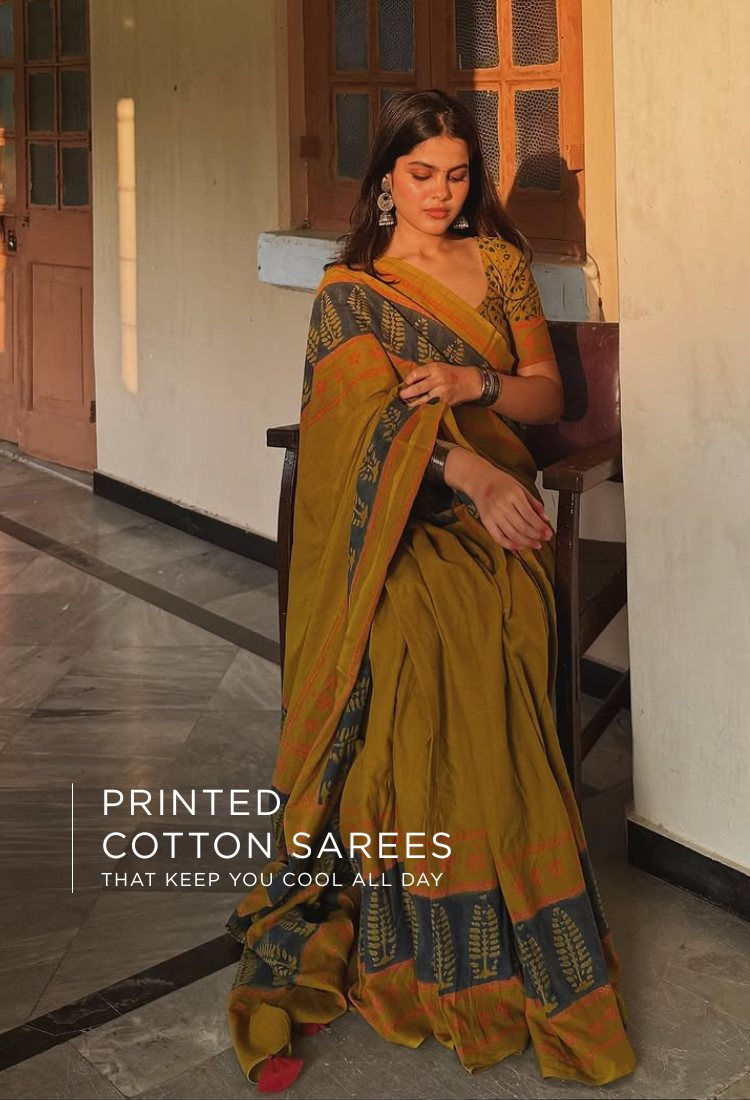
Humidity can be one of the biggest fashion challenges, especially during Indian monsoons and coastal summers. The constant sweat, sticky feeling, and fabric clinging to the body can make even the most beautiful saree feel uncomfortable. Thankfully, cotton sarees are a savior in such weather. Lightweight, breathable, and elegant, they are perfect for humid climates — if draped correctly.
In this blog, we’ll explore easy draping tips to keep your cotton saree looking crisp, stylish, and comfortable even in sticky weather.
You may also like: Soft Cotton vs Linen Sarees: What’s Better for Summer?
Why Cotton Sarees Are Ideal for Humid Weather
Cotton is a natural, breathable fabric that absorbs sweat and allows air circulation. Unlike synthetic materials, it doesn’t trap heat. That’s why traditional cotton sarees from regions like West Bengal, Tamil Nadu, and Maharashtra have been popular in hot and humid climates for centuries.
But even cotton can feel heavy if not draped properly. The key lies in preparation, pleating technique, and smart styling.

Easy Draping Tips for Humid Weather
1. Choose Lightweight & Soft Cotton
Not all cotton sarees are the same. Some can be thick and stiff, which may feel uncomfortable in humidity.
✔ Opt for:
-
Mulmul cotton
-
Kota cotton
-
Fine handloom cotton
-
Soft printed cotton
Avoid:
-
Heavily starched cotton
-
Thick layered cotton
-
Heavy borders that add weight
Soft cotton flows better and sticks less to the body.

2. Skip Heavy Starching
While starch gives structure, too much starch in humid weather can make the saree stiff and trap moisture.
Instead:
-
Use light starch if needed
-
Steam iron instead of heavy pressing
-
Wash once before wearing to reduce stiffness
A softer fall makes draping easier and more breathable.
3. Wear a Sweat-Absorbing Petticoat
Your petticoat plays a major role in comfort.
✔ Choose:
-
Pure cotton petticoats
-
Slightly loose fit (not too tight)
-
Matching or neutral shades
Avoid satin or synthetic underskirts — they trap sweat and feel sticky.
Pro tip: In extremely humid cities like Mumbai or Kolkata, breathable innerwear makes a huge difference.
4. Make Smaller, Neat Pleats
Big, bulky pleats trap heat and create unnecessary volume.
✔ Keep:
-
5–6 neat pleats
-
Medium width (not too thick)
-
Tightly pinned at the waist
This reduces bulk and keeps airflow better around the legs.
5. Keep the Pallu Light and Short
A long, flowing pallu may look dramatic, but in humid weather it can feel heavy.
✔ Try:
-
Shorter pallu length
-
Neatly pinned pleats on shoulder
-
Open pallu only for short durations
Pinned pallu stays in place and prevents constant adjusting.
6. Use Safety Pins Smartly
Humidity can cause fabric to slip due to sweat.
Use pins:
-
At shoulder (secure pallu)
-
At waist (inside pleats)
-
Lightly at hip if needed
This keeps everything structured and reduces discomfort.
7. Try Simple Draping Styles
Complicated drapes with layers increase heat. Instead, stick to simple styles like:
-
Classic Nivi drape
-
Bengali cotton style (loose but breathable)
-
Seedha pallu for minimal pleating
Avoid heavy layered experimental drapes in sticky weather.
8. Choose Breathable Blouses
Blouse fabric matters as much as the saree.
✔ Best options:
-
Cotton blouse
-
Sleeveless or elbow sleeves
-
Back-open for ventilation
-
Minimal lining
Avoid thick padding or heavy embroidery.
9. Go Minimal with Accessories
Humidity and heavy jewelry don’t mix well.
✔ Choose:
-
Lightweight earrings
-
Simple bangles
-
Comfortable sandals
Heavy necklaces and metal accessories increase sweating and discomfort.
10. Hair & Makeup Tips for Humid Saree Looks
Even styling affects overall comfort.
✔ Tie hair in:
-
Low bun
-
Braid
-
Ponytail
Avoid open hair that sticks to sweaty skin.
Use:
-
Light compact powder
-
Waterproof kajal
-
Minimal base
This keeps your overall saree look fresh.
Bonus: Quick Hacks for Extreme Humidity
-
Carry blotting paper
-
Keep a small hand towel
-
Use anti-chafing powder
-
Choose light colors (they reflect heat)
-
Prefer printed sarees over dark solids
Light shades like pastel blue, mint green, lemon yellow, and soft pink look fresh and feel lighter in humid weather.
Frequently Asked Questions (QAs)
Q1. Is cotton saree good for humid weather?
Yes. Cotton is breathable and absorbs sweat, making it ideal for humid climates.
Q2. How do I stop my cotton saree from sticking?
Wear a cotton petticoat, avoid heavy starch, and keep pleats minimal.
Q3. Should I starch cotton sarees in monsoon?
Light starch is fine, but heavy starch should be avoided in humid weather.
Q4. Which cotton saree is best for summer humidity?
Mulmul, Kota cotton, and soft handloom cotton sarees are best.
Q5. How many pleats should I make in humid weather?
5–6 neat pleats are ideal to reduce bulk and improve comfort.
Q6. Is pinned pallu better in humid weather?
Yes. It prevents slipping and keeps the saree structured.
Q7. Can I wear heavy jewelry with cotton saree in humidity?
It’s better to keep accessories minimal for comfort.
Q8. Which blouse is best for humid weather?
Pure cotton blouse with minimal lining and breathable design.