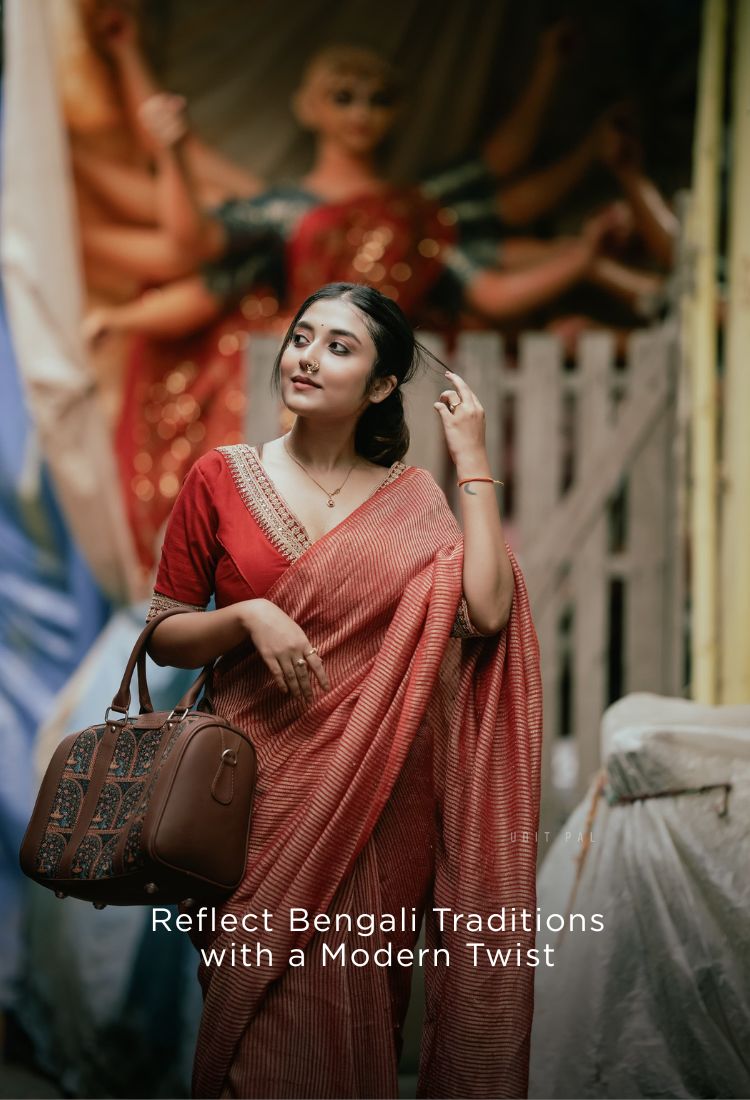
Durga Puja is one of the most vibrant and anticipated festivals in India, especially in Bengal. It’s a celebration that beautifully blends devotion, tradition, fashion, and festivity. Every day of the Puja has its own significance, rituals, and a style statement attached to it. Sarees, in particular, hold a special place in the celebrations, as they are not just attire but a symbol of grace, tradition, and cultural expression.
If you’re wondering how to dress elegantly yet appropriately for each day—from Ashtami Anjali to Sindoor Khela—this Durga Puja saree guide is here to help you look stunning while respecting customs.
You may also like: Durga Puja Special: Sarees That Reflect Bengali Traditions with a Modern Twist
Understanding the Festival and the Role of Attire
Durga Puja is not just about prayers and rituals but also about coming together, celebrating artistry, and honoring the divine feminine. Sarees are worn to embody femininity, tradition, and devotion. The drape, fabric, and color of the saree reflect both the mood of the day and the wearer's personal style.
Each day—Sasthi, Saptami, Ashtami, Navami, and Dashami—has a ritualistic importance. The saree you wear on Ashtami or Sindoor Khela isn’t just about beauty but about being part of a spiritual experience.
Ashtami Anjali: Elegance Meets Devotion
Ashtami is one of the most important days of the Puja. The Anjali ceremony is a collective prayer offered by women and men alike, standing in rows before the idol of Goddess Durga.
Saree Suggestions:
- Fabric: Soft silk or cotton silk works best as it feels comfortable during long rituals.
- Colors: Red, white, or off-white are popular choices, as they symbolize purity, strength, and energy.
- Designs: Light embroidery, minimal zari work, or handloom patterns enhance the spiritual vibe.
- Blouse Style: Keep it simple—boat necks or round necks with elbow-length sleeves complement the look.
Styling Tips:
Pair your saree with subtle gold or silver jewelry, and opt for soft makeup with kohl-lined eyes. A small red bindi brings the whole look together.
Navami and Cultural Celebrations: Dressing Up Without Going Overboard
Navami is a day of cultural performances, music, and feast. You can experiment with richer fabrics but keep it graceful.

Saree Suggestions:
- Fabric: Banarasi silk or tussar silk with heavier borders.
- Colors: Maroon, mustard, emerald green, or royal blue—festive yet traditional.
- Designs: Bold motifs like temple borders, floral patterns, or geometric designs.
Styling Tips:
This is a good day to wear statement jewelry—layered necklaces or bangles—but ensure it doesn’t overpower the elegance of the saree.
Dashami and Sindoor Khela: Bold and Beautiful
Dashami marks the farewell to Goddess Durga. It’s a day full of emotions and rituals like Sindoor Khela, where married women apply vermilion (sindoor) to each other’s foreheads, symbolizing marital bliss and togetherness.

Saree Suggestions:
- Fabric: Red and white cotton silk or handloom sarees.
- Colors: Red with white is the traditional and most preferred combination.
- Designs: A bold red border on a white saree or floral red prints on cream or ivory fabric.
- Blouse: Choose a red blouse with contrast piping or embroidery for a festive touch.
Styling Tips:
On this day, go bold—bright red lips, kumkum on your forehead, and temple-inspired jewelry complete the look. Keep your hair open or tied in a loose bun adorned with white flowers.
Other Days: Sasthi, Saptami, and Beyond
Sasthi: The Puja opens with rituals on this day. Opt for pastel shades like peach, mint, or lavender with minimal embellishments.
Saptami: A day of preparation and fasting, so choose comfortable cotton sarees with block prints or subtle motifs.

Choosing the Right Accessories
Jewelry: Go for lightweight pieces on ritual-heavy days and bold accents on celebratory days.
Footwear: Flats or low block heels are practical for standing during prayers.
Makeup: Soft tones for Anjali days and bold red or maroon accents on Dashami.
Bags: Clutch or small potli bags in festive fabrics like brocade or velvet work well.
Saree Draping Styles for Durga Puja
Classic Nivi Draping: Ideal for ritualistic days—graceful and neat.
Bengali Style Draping: Iconic for the festival, with the pallu elegantly placed over the left shoulder and pleats neatly pinned.
Open Pallu Style: Perfect for dance and performances—offers ease of movement.
Temple Pleats: Adds a touch of tradition with pleats fanned neatly in front.
Sustainable and Thoughtful Choices
For those mindful of the environment:
- Choose handloom or Khadi sarees.
- Avoid heavy synthetic fabrics.
- Support local artisans.
- Reuse or restyle your sarees across years.
Quick Checklist Before You Step Out
Is your saree comfortable for long hours?
Does the fabric suit the weather?
Have you kept accessories simple on prayer days and bold on festive ones?
Does the color align with the spirit of the day?
Have you styled your hair in a way that complements your look but stays practical?
Frequently Asked Questions (FAQs)
Q1. Can I wear heavy silk sarees for Anjali rituals?
You can, but lighter cotton or silk blends are recommended since you’ll be standing and offering prayers for a while.
Q2. What is the significance of red and white on Dashami?
Red symbolizes energy, love, and married life, while white represents purity and peace. The combination celebrates togetherness and feminine strength.
Q3. Are pastel colors acceptable during Durga Puja?
Yes! Pastel shades are perfect for Sasthi or Saptami, offering a softer, more elegant look that still feels festive.
Q4. How can I drape my saree in a way that suits movement during dance performances?
Opt for the open pallu or Bengali style with fewer pleats pinned tightly. This ensures comfort and fluid movement.
Q5. How do I care for festive sarees to reuse them next year?
Dry clean them if needed, air them out after use, and store them in muslin cloth bags away from direct sunlight.