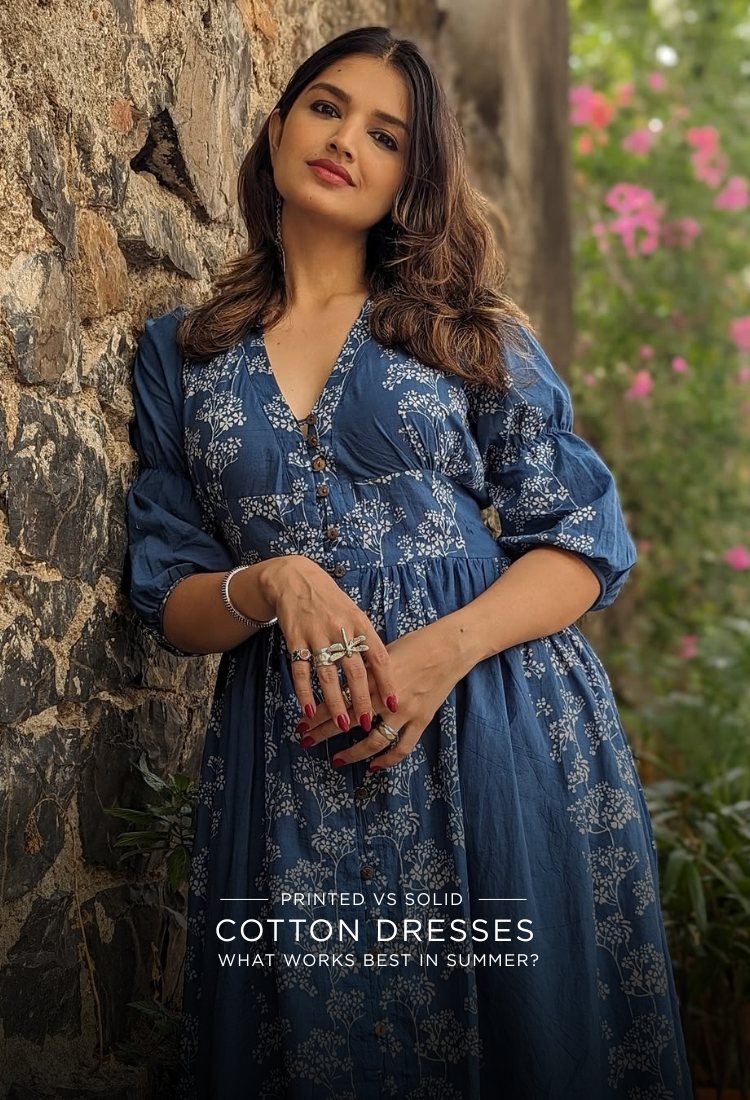
When the air feels heavy, your skin feels sticky, and stepping outside seems like walking into a steam room, you know humidity has arrived. Especially in cities like Pune, Mumbai, or any coastal and monsoon-prone region, dressing right can make all the difference between feeling fresh and feeling frustrated.
The secret? Loose cotton dresses.
Lightweight, breathable, and effortlessly stylish, cotton dresses are a humidity-season essential. Let’s explore why they work so well, which styles to choose, and how to wear them beautifully all season long.
You may also like: Printed vs Solid Cotton Dresses: What Works Best in Summer?
Why Humidity Demands a Smarter Wardrobe
Humidity means high moisture in the air. When this happens:
-
Sweat doesn’t evaporate quickly
-
Clothes stick to your skin
-
Tight fabrics feel suffocating
-
Synthetic materials trap heat
That’s why the right fabric and fit matter more than ever.
Cotton, being a natural fiber, absorbs sweat and allows airflow. And when styled in loose silhouettes, it gives your skin the breathing space it desperately needs.
Why Loose Cotton Dresses Are Perfect for Humid Weather
1. Breathability That Keeps You Cool
Cotton allows air to circulate freely, helping moisture evaporate faster. Loose cuts enhance this ventilation, reducing stickiness.
2. Sweat Absorption
Cotton absorbs sweat instead of trapping it against your body, which reduces discomfort and skin irritation.
3. Skin-Friendly Comfort
Humidity often causes rashes and irritation. Cotton is soft, hypoallergenic, and gentle on sensitive skin.
4. Effortless Style
Loose cotton dresses look relaxed yet elegant. You don’t need heavy styling—just simple accessories and you’re ready.
Best Types of Loose Cotton Dresses for Humid Days
1. A-Line Cotton Dresses
A-line dresses gently flare out from the waist, allowing airflow and preventing the fabric from clinging to your legs.

Best for: Office wear, brunches, daily errands
Why it works: Structured yet airy
2. Tiered Cotton Dresses
Tiered dresses add volume and movement. The layers allow better circulation and prevent sweat patches from becoming obvious.

Best for: Travel, casual outings
Why it works: Flowing silhouette hides humidity effects
3. Cotton Shirt Dresses
Structured yet relaxed, shirt dresses give a polished look without compromising comfort.

Best for: Work, meetings, semi-formal days
Why it works: Front opening allows airflow and easy movement
4. Maxi Cotton Dresses
Maxi dresses may look long, but when made from lightweight cotton, they feel airy and elegant.

Best for: Evening outings, vacations
Why it works: Full coverage without heaviness
Choosing the Right Cotton for Humidity
Not all cotton fabrics feel the same. Here’s what to look for:
✔ Mulmul Cotton
Ultra-soft and extremely breathable. Perfect for high humidity.
✔ Cambric Cotton
Lightweight and smooth. Ideal for daily wear.
✔ Slub Cotton
Textured and airy. Looks stylish and feels comfortable.
✔ Handloom Cotton
Naturally breathable with beautiful weaves.
Avoid thick, heavily lined cotton in humid weather—it may trap heat.
Loose Fit: Why It Matters More Than You Think
In humid weather, tight clothes:
-
Stick to sweaty skin
-
Cause friction and irritation
-
Restrict airflow
Loose dresses create a small air pocket between fabric and skin. This space allows sweat to evaporate faster, keeping you cooler and fresher.
Even if the temperature isn’t extremely high, humidity alone can make fitted outfits uncomfortable.
Colors & Prints That Work Best in Humidity
Light Colors
-
White
-
Pastels
-
Soft yellows
-
Powder blues
They reflect heat and hide salt marks better.
Subtle Prints
Printed cotton dresses are great for humid days because they camouflage sweat patches better than solid dark colors.
Small florals, block prints, and minimal patterns are practical and stylish.
How to Style Loose Cotton Dresses in Humid Weather
Keep Accessories Minimal
Heavy jewelry increases discomfort. Choose:
-
Small earrings
-
Light bangles
-
Minimal chains
Choose Breathable Footwear
Opt for:
-
Kolhapuris
-
Open sandals
-
Flat sliders
Avoid closed synthetic shoes during high humidity.
Light Layering Only
If needed, add:
-
A thin cotton shrug
-
A soft dupatta
Avoid denim jackets or heavy overlays.
Care Tips for Cotton Dresses in Humid Seasons
Humidity can make clothes smell musty if not dried properly.
✔ Always dry cotton in sunlight
✔ Avoid storing damp clothes
✔ Use breathable fabric storage
✔ Iron lightly to maintain airflow in fibers
Proper care ensures your dresses remain fresh all season.
Why Every Wardrobe Needs Humidity-Friendly Cotton Dresses
Whether you’re commuting to work, attending a family function, or just running errands, humidity can affect your mood and confidence.
Loose cotton dresses:
-
Reduce discomfort
-
Prevent skin irritation
-
Maintain a polished appearance
-
Require minimal effort to style
They are practical, affordable, sustainable, and timeless.
In climates like India’s monsoon season, they aren’t just a fashion choice—they’re a lifestyle essential.
Frequently Asked Questions (QAs)
Q1: Are loose cotton dresses better than fitted ones in humidity?
Yes. Loose dresses allow better airflow, prevent sticking, and reduce sweat discomfort compared to fitted styles.
Q2: Which cotton fabric is best for extremely humid weather?
Mulmul and lightweight handloom cotton are ideal because they are ultra-breathable and soft.
Q3: Do dark colors feel hotter in humidity?
Dark colors absorb more heat and may show sweat marks more easily. Light shades are usually more comfortable.
Q4: Can I wear cotton dresses to the office during monsoon?
Absolutely. Choose structured styles like shirt dresses or A-line dresses in subtle prints for a professional look.
Q5: How do I prevent cotton from smelling damp in monsoon?
Ensure proper sun drying, store in a dry place, and avoid folding clothes before they are completely dry.
Q6: Are printed cotton dresses better than solid ones in humidity?
Printed dresses can hide sweat marks better than solid light fabrics, making them practical for humid days.
Q7: Is layering recommended in humid weather?
Minimal layering is fine if fabrics are lightweight. Avoid heavy or synthetic layers.